
Are Basement Leaks Covered by Home Insurance?
If you’re looking to protect your home from damage, you’ve likely spent a lot of time thinking about your homeowner’s insurance. While every plan is different, you’ll ideally want to invest in coverage that keeps you safe not only from your everyday problems but also from the problems that creep up when you least expect them.
Basement leaks and flooding, for example, are difficult to get a handle on, especially if you don’t know what kind of signs around your home might give this damage away. Luckily, there are times when your homeowner’s insurance will help you recover from the damage leaks can do to your home. Unfortunately, you won’t always be able to rely on this coverage to bring your home back into a state of happy repair.
What Causes Basement Leaks?
Undoubtedly, the most common cause of basement leaks we see in the Southeastern United States is hydrostatic pressure. Its development is slow, but costly.
Hydrostatic pressure continues to build every time it rains or snows. The water drains below the soil and pools around the perimeter of your basement.
Eventually, all this water pressure puts massive stress on your basement walls. Without any protection, your basement could end up with cracked walls or bowing walls. Watch the video to learn more about hydrostatic pressure, courtesy of our friends at Groundworks.
Even so, there are other causes of basement leaking. You could be dealing with water in your basement because of leaky pipes, faulty window wells, or a cracked basement floor. No matter how water gets into your basement, it isn’t fun to deal with at all—and may require costly repairs.
Does Homeowner’s Insurance Protect You from Basement Leaks?
If you find yourself dealing with leaks throughout your basement, you’ll want to do what you can to see that damage repaired in a timely manner. While you can work with area contractors to estimate just how much repairs may cost, you may still want to file an insurance claim to see if you can’t balance out the expense.
While each homeowner’s insurance plan is going to differ, there are some claims that most providers will always honor. These often include leaks caused by:
- Faulty water heaters
- Broken or burst pipes
- Piping problems
- Large appliance malfunctions
That said, your insurance provider may not offer to help you right off the bat. If you can trace your leak to an appliance within your home, your provider will place the initial responsibility for your leak on the manufacturer. So long as the appliance in question is under warranty, the manufacturer will have to pay for both a replacement and any repairs your home may need.
Providers will take responsibility for these kinds of leaks only if the warranty you had has expired and it can be proven that the appliance in question was the sole cause of leaks throughout your basement. Not only, then, will your provider be able to accept your claim, but they can also either replace the damaged appliance for you or provide you with the means to do so yourself.
When Won’t Your Insurance Provider Cover a Basement Leak?
There are some cases in which an insurance provider will see fit to deny your claim for coverage after basement flooding or leakage. These leaks are often caused by problems outside of your home and can include:
- Environmental leaks – Hydrostatic pressure, as mentioned, can build up outside of your home more easily if you live in a marshy or otherwise damp area. If you forgo waterproofing measures that might otherwise keep unwanted water out of your home, you may find yourself dealing with what is known as an environmental leak. If an insurance provider traces the leak in question back to the ecosystem in which you live, they’ll be less likely to provide you with the funds you may need to restore your property.
- Leaks caused by the weather – In a similar vein, insurance providers are reluctant to approve claims citing rain as the primary cause of a basement leak or flood.
- Basement seepage – Seepage and leaks have similar effects on the structural integrity of your home. However, providers are more likely to cover leaks caused by an internal appliance than they are to consider the damage seepage can do to your property. Most contractors and insurance providers classify seepage as the creep of water into your home long after it’s rained or flooded in your area. Providers specifically may work to outline the soil conditions around your home that led to this kind of damage, allowing them to pin the cause of your leak on external forces instead of on any failures they may otherwise have to compensate for.
Repair Basement Leaks with Help from AFS!
Are you contending with basement leaks, flooding, and other kinds of damage? Don’t try to take on repairs alone. Instead, reach out to the professionals at AFS serving Huntsville, AL. Together with these pros, you can assess the damage in your home and repair it quickly and efficiently. If you want to get ahead of water damage, you can even invest in basement waterproofing measures. Reach out today for a free quote on the services you need to keep your home watertight.
FAQs
The most problematic forces and elements that affect our homes are those that we cannot see. Hydrostatic pressure is one such force. It’s a problem that develops underground, and it doesn’t announce itself until the basement wall is already affected in some way. That said, there are things you can do to prevent it from happening.
- Outdoor Prevention
If you haven’t placed much thought into perfecting the drainage system around your yard, then you should move that up in your priority list. Making sure that excess amounts of water don’t accumulate around your home is the most effective way of preventing hydrostatic pressure. You can do this by hiring a landscaping company to check if your yard has a positive or negative grade. A positive grade means that all water that lands on your property, be it from snow or rainfall, naturally flows away from your home and into the streets. If the grade is negative, then this can always be changed with some landscaping work.
Next would be to extend the downspouts or position them in a way that makes sure the water is drained as far from the foundation as possible. Any inflatable pools or sprinklers close to the house should be moved away. If you have any plants or flower beds next to the house, then make sure that you do not over water them so that the excess water doesn’t accumulate next to your foundation.
- Indoor Prevention
Indoors, installing a sump pump is the best change you can make to prevent hydrostatic pressure. A sump pump will not only collect the water that makes its way into your basement and pump it away, but also it will do the same for the water that accumulates outside of your foundation. If you already have a sump pump, then making sure that it’s properly maintained will ensure that it does its job efficiently and keep the water away.
If you live in a rainy state like Alabama, then you might want to consider getting two sump pumps. With the number of tropical storms that hit Alabama, flooding is so frequent that one sump pump will not do. Two sump pumps will ensure that water is constantly drained from the foundation. Having a backup will also make sure that your foundation soil will stay dry even after one of the pumps malfunctions.
Yes, you can fix bowing or leaning basement walls, but you cannot do it alone. These are structural repairs that require a professional eye and an experienced hand to get the best results for your home and future. Of course, we understand the desire to save money and time by pursuing DIY, but when it comes to structural repairs, the risks are too high! Not only do professionals have all the tools they need to hand, but also, they can get the best products and materials at industry prices.
If your basement condensation constantly settles over your basement, it can start to affect other areas of your home as well. Because condensation issues are often the result of high humidity levels, you can bet that all that excess humidity can create other issues around the rest of your home, too.
The Stack Effect
The hotter the temperature, the more humidity there will be floating in the air. This is why you might notice your basement feeling a lot muggier in the summertime. Additionally, hot air tends to rise, which means that if you have a humidity problem in your basement, the humidity is likely to rise up to the upper levels of your home as well. You might find that your home is suddenly a lot hotter than it used to be, and crank up your air conditioner as a result.
Conversely, any cold air that manages to slip through any cracks can also cause issues. Cold air is far denser than hot air, which means it can displace any warm air from your heater and push it up and out of your home. You might then turn your heater up higher to compensate for this chill. Both of these can result in your energy bills skyrocketing.
Foundation Damage
These flooding issues can easily seep into your foundation as well. It is possible that the soil supporting your foundation has washed out due to the excess moisture, causing your foundation to settle. It is also possible that the constant flooding has created immense pressure on your foundation from all sides, causing cracks.
Conversely, a cracked basement floor may also lead to flooding. Thus, this damage works both ways, which is why you need to call a basement expert at AFS to inspect your basement annually and prevent it from worsening. Our experts can also implement quick repairs to both the basement and foundation to prevent any condensation issues from attacking your basement.

Ted Dryce
Publish Date:
Last Modified Date:
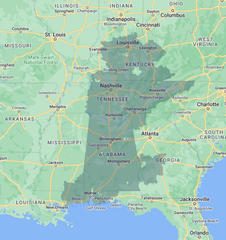
Our Locations
130 Interstate Commerce Crt. Bldg. 100 & 200
Alabaster, AL 35007
806 N Holtzclaw Ave.
Chattanooga, TN 37404
2701 Opelika Road
Phenix City, AL 36870
1909 Montgomery Hwy, Suite 322,
Dothan, AL 36303
1317 26th Ave, Ste 101
Gulfport, MS 39501
2415 Jordan Road
Huntsville, AL 35811
3028 E Governor John Sevier Highway
Knoxville, TN 37914
13105 Middletown Industrial Blvd.
Louisville, KY 40223
3131 Hamilton Blvd.
Theodore, AL 36582
1519 Heil Quaker Blvd.
LaVergne, TN 37086
89 W. Hood Dr.
Pensacola, FL 32534